
Wednesday, 7 March 2018
Friday, 27 October 2017
Legal Implications of the Use of Social Media by Armed Actors
The use of apps, social media and other methods of digital communication between people is constantly on the increase. This practice has extended into armed conflicts, where parties to the conflicts use such tools for their communications. Is international humanitarian law (IHL) applicable to the employment of these new technologies during armed conflict—and if so, how? Read Pontus Winther's post in ICRCs blog Humanitarian Law and Policy.

Thursday, 17 August 2017
Invitation to a panel discussion on Cyber operations and international law
Stockholm Center for
International Law and Justice and the Centre for International and
Operational Law (CIOL) at the Swedish Defence University invite you
to a panel discussion on
Cyber operations and
international law: prospects for global norms?
Although some
early enthusiasts thought of cyberspace as a realm beyond sovereignty, it is
now abundantly clear that both domestic law and international law apply to
cyberspace. However, there is no international convention on security in cyberspace
and no global consensus on exactly how
existing international law applies. A UN Group of Governmental Experts (GGE) has
been trying to set out how current international law applies and formulate draft
rules on responsible behaviour in cyberspace, but their latest meeting, in
2017, was ultimately unsuccessful. Efforts are ongoing in other fora, like the
G20 and OSCE, but the world is still far from agreement on how existing law
shall apply and what, if any, new rules are needed. In the meantime, the number
of cyber incidents are multiplying and getting more serious, with attacks from
both states and non-state actors. This panel will present current efforts of
regulating security cyberspace and discuss the prospects for future
regulations.
Presentation of the problem -- the application of
international law to cyber operations (Professor Pål Wrange, Stockholm
University)
The Tallinn Manual process (Professor Terry Gill,
University of Amsterdam)
The GGE (Ambassador Marja Lehto, Finnish Ministry for Foreign Affairs)
The Global Commission on the Stability of Cyberspace
(Ambassador Marina Kaljurand, chair
of the commission)
Monday 28th August 2017 14:00-15:00
in lecture hall 5,
Level 3, B Building,
University Campus Place, Frescati
This event has been made possible through a generous
grant from the Marcus Wallenberg Foundation for International Scientific
Collaboration
Wednesday, 28 June 2017
Centrum för operativ juridik och folkrätt åker till Almedalen
Försvarshögskolan finns på plats i Visby under Almedalsveckan 2017. Centrum för Operativ Juridik och Folkrätt kommer också att finnas på plats för seminarier och diskussioner kring krisberedskap, totalförsvarslagstiftning och folkrätt.
Den 3 juli kl. 11.45-12.30 genomförs seminariet "Höjd beredskap - ett verktyg för samhällsstörningar i gråzonen"
Deltar gör:
- Peter Hultqvist, Försvarsminister
- Nils Svartz, Vikarierande generaldirektör, Myndigheten för samhällsskydd och beredskap (MSB)
- Jenny Deschamps-Berger, Chef Sektionen för analysstöd vid Crismart, Försvarshögskolan
- Marika Ericson, Doktorand i internationell rätt och militärteknik
Modererar gör Robert Egnell, institutionschef vid Institutionen för säkerhet, strategi och ledarskap (ISSL), Försvarshögskolan
Länk till seminariet:
https://www.facebook.com/events/109315806335018
Länkar till övriga FHS seminarier:
Triple Helix - ett verktyg mot framtida militära hot
https://www.facebook.com/events/441672212858075
Framtidens soldat – en hacker? Så fungerar cyberförsvaret
https://www.facebook.com/events/116557865598290/
Så attraherar vi unga till försvaret
https://www.facebook.com/events/1770247469934026
Så påverkar Trump och Brexit det europeiska försvarssamarbetet
https://www.facebook.com/events/1423015454420252
Wednesday, 5 April 2017
New Publication: The Practice of Shared Responsibility in International Law
Professor Kleffner acted as co-editor of the international military operations cluster (chapters 23-30) of the publication 'The Practice of Shared Responsibility in International Law', published by Cambridge University Press. The book is edited by Professor André Nollkaemper and Dr. Ilias Plakokefalos. You can find out more about the publication at http://www.cambridge.org/se/academic/subjects/law/public-international-law/practice-shared-responsibility-international-law?format=HB&isbn=9781107107090
Tallinn Manual 2.0 published
The second edition of the Tallinn Manual, entitled 'Tallinn Manual 2.0 on the International Law Applicable to Cyber Operations' has been published by Cambridge University Press. The Manual has been prepared by an international group of experts at the invitation of the NATO Cooperative Cyber Defence Centre of Excellence. Professor Michael N. Schmitt of the US Naval War College and the University of Exeter acted as Director and General Editor. Professor Jann Kleffner contributed to the Manual and Dr. Heather Harrison Dinniss acted as one of the legal peer reviewers. You can learn more about Tallinn 2.0 and its launch at https://ccdcoe.org/tallinn-manual-20-international-law-applicable-cyber-operations-be-launched.html and at http://www.cambridge.org/se/academic/subjects/law/humanitarian-law/tallinn-manual-20-international-law-applicable-cyber-operations-2nd-edition?format=PB.
Saturday, 1 April 2017
Third and Final Working Session Day of the Seminar
All good things must come to an end, and so has the XI Seminar for Legal Advisors of the Armed Forces.
On Friday, the final day went under the theme New Military Technologies and the Law. It was chared by Brigadier-General Professor Dr. Paul Ducheine (National Defence University; The Netherlands).
First speaker of the day was Marika Ericson (lecturer and PhD candidate, Swedish Defence University; Sweden) on the topic of the Swedish experiences in regards of the interplay between domestic law and international law, and the institutional responsibilities.
Ms Ericson emphasized that the weakest point in cyber security is that technology is developed based on everything but security. Moreover, is cyberattacks a challange to the dichotomy of war and peace? Do we need a third paradigm?
Colonel Gary Corn (Staff Judge Advocate, US Cyber Command; USA) gave a presentation on Navigating
Grey Zone Challenges in and through Cypberspace. COL Corn also pointed out the difficulty of categorizing a cyberattack as an armed attack or as an action in peace time. He emphasized that before taking countermeasures to a cyberattack, states have to analyze what authority it has, and that states need to have justification in interantional law in order to take action. He also stressed the necessity of defining whether the cyberattack breached any interanational laws or was lawful.
The Seminar continued with a presentation from Dr. Heather Harrison Dinniss (Senior Lecturer in international law, Swedish Defence University; Sweden) on Human Enhancement Technologies: Solider 2.0 – Miliatry Human Enhancement & International Law. As Dr. Harrison Dinniss clarified, the human enhancement applies to the idea of Captain America rather than the Terminator, that is, not robots. She talked about three major developments in human enhancement: biochemical, cybernetics and prostheses. We are upgrading people. Giving them abilities what is beyond what is considered “normal”.
Dr. Bill Boothby (Associate Fellow Geneva Centre for Security Policy, UK) spoke of autonomous weapons and some of the problems with the concept of "person in the loop" in regards of remotely polited aircrafts. The loop consists of two links: the uplink from the operator to the aircraft through which instructions are given; and the downlink from the aircraft to the centre giving information to the operator - who gives instructions to the aircraft.
The Seminar ended with a closing dinner.
/Zarah
On Friday, the final day went under the theme New Military Technologies and the Law. It was chared by Brigadier-General Professor Dr. Paul Ducheine (National Defence University; The Netherlands).
 |
| Brigadier-General Professor Dr. Paul Ducheine. Photo: Zarah Abrahamsson |
First speaker of the day was Marika Ericson (lecturer and PhD candidate, Swedish Defence University; Sweden) on the topic of the Swedish experiences in regards of the interplay between domestic law and international law, and the institutional responsibilities.
Ms Ericson emphasized that the weakest point in cyber security is that technology is developed based on everything but security. Moreover, is cyberattacks a challange to the dichotomy of war and peace? Do we need a third paradigm?
 |
| Marika Ericson. Photo: Zarah Abrahamsson |
 |
| Colonel Gary Corn. Photo: Zarah Abrahamsson |
 |
| Dr. Heather Harrison Dinniss. Photo: Zarah Abrahamsson |
Dr. Bill Boothby (Associate Fellow Geneva Centre for Security Policy, UK) spoke of autonomous weapons and some of the problems with the concept of "person in the loop" in regards of remotely polited aircrafts. The loop consists of two links: the uplink from the operator to the aircraft through which instructions are given; and the downlink from the aircraft to the centre giving information to the operator - who gives instructions to the aircraft.
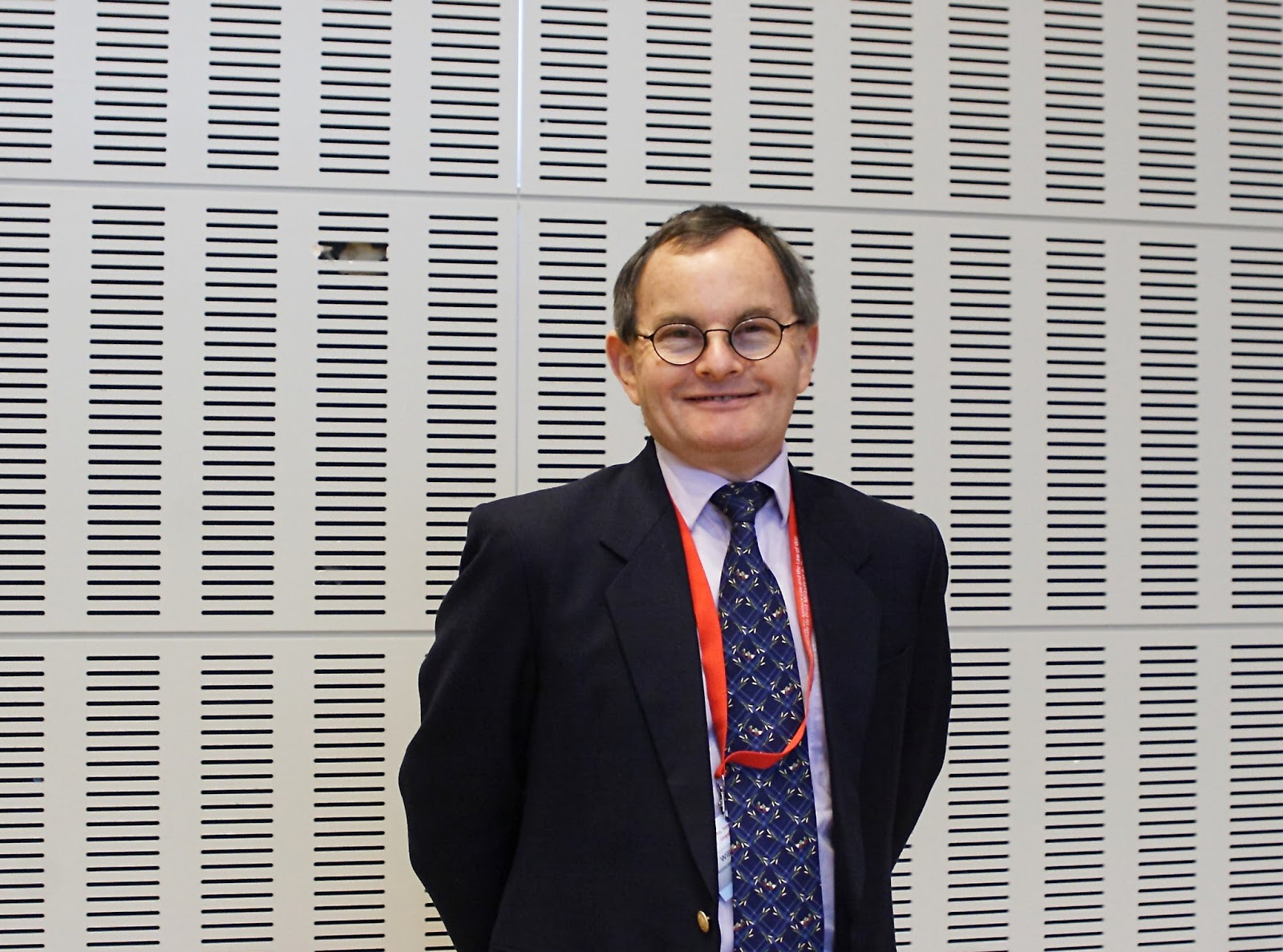 |
| Dr. Bill Boothby. Photo: Zarah Abrahamsson |
The Seminar ended with a closing dinner.
/Zarah
Thursday, 30 March 2017
Second Working Session Day of the Seminar
The Second Working Session Day of the XI Seminar for Legal Advisors of the Armed Forces focused on practical issues for Legal Advisors in military operations. It was chaired by Colonel Ben Klappe throughout the day, and he began by introducing Pontus Winther (lecturer and PhD candidate, Swedish Defence University, Sweden).
Mr Winther spoke about his research project, Legal Aspects of Influence Operations. He explained to the audience that he defines influence operations as "the use of information to influence individuals to certain behaviour". The purpose of the research project is to compare legal consequences in international law in armed conflict, occupation and military operations below the threshold of armed conflict.
Mr Winther spoke about his research project, Legal Aspects of Influence Operations. He explained to the audience that he defines influence operations as "the use of information to influence individuals to certain behaviour". The purpose of the research project is to compare legal consequences in international law in armed conflict, occupation and military operations below the threshold of armed conflict.
 |
| Pontus Winther. Photo: Zarah Abrahamsson |
Next speaker was Professor Dr. Marco Odello (Reader in Law and Director of International and External Engagement at Aberystwyth University, UK). The topic was human tafficking and peace operations, and Professor Odello talked about the legal aspects of two central legal documents in fighting human trafficking: Protocol to Prevent, Suppress and PunishTrafficking in Persons (also known as the Palermo Protocol), and the UN Convention against TransnationalOrganized Crime. Professor Odello emphasized that the Protocol must be interpreted in the light of
the Convention. There are also possible links between trafficking human beings (THB) and sexual exploitation abuse (SEA), and we need to identify and recognize such links between these two crimes.
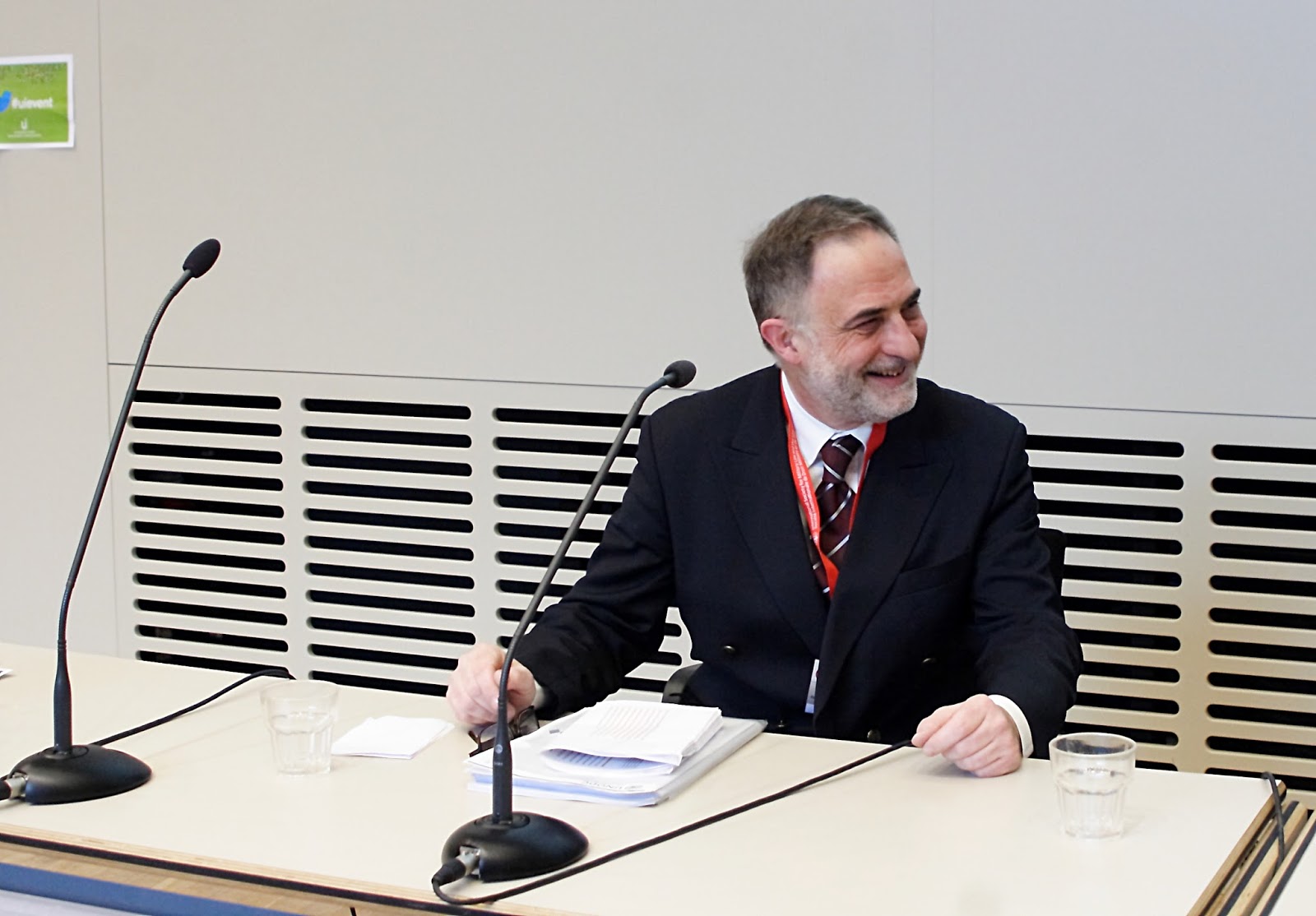 |
| Professor Dr. Marco Odello. Photo: Zarah Abrahamsson |
Staff Brigadier Salem Jumaa Rasheed Al Kaabi (Director of the Military Justice Directorate, United Arab Emirates) gave a presentation on the development of the newly established military justice system in the United Arab Emirates.The vision was to realize a leading position on the level of contemporary military judicial systems that is transparant and accountable. One of the purposes of establishing the system was due to the difficulty of civil public prosecution handling
crimes committed at military camps and units due to their confidentiality and
privacy. Military prosecution members or the military judges
have a better knowledge of military life.
 |
| Staff Brigadier Salem Jumaa Rasheed Al Kaabi. Photo: Zarah Abrahamsson |
Arne Willy Dahl (Judge Advocate General, ret., and Honorary President of the International Society for Military Law and the Law of War, Norway) gave a speech on the development of the Oslo Manual. The first meeting was held in 2004 and the final expert meeting of group of experts will take place in June 2017. ISMLLW a session in Namibia 2008 where the not yet final HPCR Manual was presented for comments to the African
region. The president and members of the ISMLLW
participated in the project in their personal capacity. Members the Board to the Society are in the group of
experts of the Oslo manual. This means that even though there no formal cooperation, but there are some
overlaps.
 |
| Arne Willy Dahl. Photo: Zarah Abrahamsson |
The Seminar continued with a speech by Ambassador Dr. Marie G. Jacobsson (LL.D., Principal Legal Advisor on International Law, Swedish Ministry for Foregin Affairs; Former Member of the United Nations Intenational Law Commission; and Special Rapporteur for the topic Protection of the environment in relation to armed conflict; Sweden). Dr. Jacobsson spoke in the capacity of former Special Rapporteur and gave a presentation on the development of awareness of the proction of the environment in relation to armed conflict. She also talked about the work of the ILC on the matter, and that the next step for the ILC is the adoption of the Commentaries to the Draft Principles of the topic Protection of the environment in relation to armed conflict. In 2018 there will be a debate in the 6th Committee, and product is estimated to be finalized 2019-2021.
 |
| Ambassador Dr. Marie G. Jacobsson. Photo: Zarah Abrahamsson |
/Zarah
Wednesday, 29 March 2017
The First Working Session Day of the Seminar
The first Working Session day of the seminar began with the Keynote speaker, mr Jan Salestrand, State Secretary at the Swedish Ministry for Defence.
General Michael W. Meier (Special Assistant for Law of War Matters, Office of the Judge Advocate General, International and Operational Law Deparment of the Army, USA), gave a presentation on the legal challenges when participating in a training and advisory mission.
Brigadier-General Darren Stewart (OBE, Head Operational Law, Army Headquarters, UK)
highlighted the issue of when does an actor become a party to the conflict, in particular UN Peacekeeping Operations, given that the actor responds to an armed attack and uses self-defence? For state actors, the requisits are that there has to be an armed attack directed at the state. Another state comes to the attacked state's aid on the request of the attacked state. The intervening (aiding) state will become a party to the armed conflict, and the legal implications will depend on the conduct of hostilities.
The question is: would a UN Peacekeeping Operation become a party to the conflict if using force in self-defence? How long can they use self-defence? To what extent?
Sally Longworth (PhD candidate at Stockholm University, Sweden) spoke about legal framework relating to gender and gender implactions of implementing law applicable in military operations. Ms Longworth stressed that if we do not understand how the conflict is affecting women and men differently, then we will not know how to best respond to the issues arising from the different ways the conflict affects people. Consequently, we will not fully understand what the implications of the legal framework will gender-related issues in armed conflicts are not taken into consideration.
Lieutenant Colonel John Moore (Legal Adviser/Gender Adviser at NATO Joint Warfare Center in Stavanger, Norway) presented how the gender perspective is integrated into NATO's operations in recent conflicts.
"We do not only talk the talk," LTC Moore said, "we also walk the walk."
One important document in this progress is Joint Headquarters Standard Operating Procedure 106 Functions in JFC & JTF Headquarters.
Furthermore, NATO Secretary General's has appointed a Special Representative for Women, Peace and Security and the chair is currentl held by Marriët Schuurman.
The Seminar Director, Colonel Ben Klappe (Senior Military adviser at the Office of the Special Coordinator on improving UN response to sexual exploitation and abuse, UNHQ) completed the trio of panelists. COL Klappe, from the Netherlands, spoke of the work of the UN to combat sexual exploitation in peacekeeping missions.
The participants of the Seminar were then divided into groups and discussed issues on the matter. The groups then presented their conclusions to the rest of the participants followed by a discusison.
The Session President ended the first Working Session Day.
/Zarah
 |
| The XI Seminar for Legal Advisors of the Armed Forces. Photo: Paulina Sundel/FHS |
The Use of Force in Contemporary Military Operations
Professor Jann Kleffner (Director of the International Law Centre at the Swedish Defence Univeristy and host for the seminar) chaired the first Work Session on the theme the Use of force in Contemporary Military Operations.General Michael W. Meier (Special Assistant for Law of War Matters, Office of the Judge Advocate General, International and Operational Law Deparment of the Army, USA), gave a presentation on the legal challenges when participating in a training and advisory mission.
 |
| General Michael W. Meier. Photo: Zarah Abrahamsson |
Brigadier-General Darren Stewart (OBE, Head Operational Law, Army Headquarters, UK)
highlighted the issue of when does an actor become a party to the conflict, in particular UN Peacekeeping Operations, given that the actor responds to an armed attack and uses self-defence? For state actors, the requisits are that there has to be an armed attack directed at the state. Another state comes to the attacked state's aid on the request of the attacked state. The intervening (aiding) state will become a party to the armed conflict, and the legal implications will depend on the conduct of hostilities.
The question is: would a UN Peacekeeping Operation become a party to the conflict if using force in self-defence? How long can they use self-defence? To what extent?
 |
| Brigadier-General Darren Stewart. Photo: Zarah Abrahamsson |
Gender and Military Operations
The second part of the first Work Session day focused on Gender and Military Operaitons. It was charied by Cecilia Tengroth (Legal Advisor at the Swedish Red Cross). Ms Tengroth emphasized that a gender perspective strengthens international peace and security. Ms Tengroth also presented the report "IHL and Gender - Swedish Experiences" published by the Swedish Red Cross and the Swedish Ministry for Foreign Affairs. |
| Cecilia Tengroth. Photo: Zarah Abrahamsson |
Sally Longworth (PhD candidate at Stockholm University, Sweden) spoke about legal framework relating to gender and gender implactions of implementing law applicable in military operations. Ms Longworth stressed that if we do not understand how the conflict is affecting women and men differently, then we will not know how to best respond to the issues arising from the different ways the conflict affects people. Consequently, we will not fully understand what the implications of the legal framework will gender-related issues in armed conflicts are not taken into consideration.
 |
| Sally Longworth. Photo: Zarah Abrahamsson |
Lieutenant Colonel John Moore (Legal Adviser/Gender Adviser at NATO Joint Warfare Center in Stavanger, Norway) presented how the gender perspective is integrated into NATO's operations in recent conflicts.
"We do not only talk the talk," LTC Moore said, "we also walk the walk."
One important document in this progress is Joint Headquarters Standard Operating Procedure 106 Functions in JFC & JTF Headquarters.
Furthermore, NATO Secretary General's has appointed a Special Representative for Women, Peace and Security and the chair is currentl held by Marriët Schuurman.
 |
| Lieutenant Colonel John Moore. Photo: Zarah Abrahamsson |
The Seminar Director, Colonel Ben Klappe (Senior Military adviser at the Office of the Special Coordinator on improving UN response to sexual exploitation and abuse, UNHQ) completed the trio of panelists. COL Klappe, from the Netherlands, spoke of the work of the UN to combat sexual exploitation in peacekeeping missions.
 |
| Colonel Ben Klappe. Photo: Zarah Abrahamsson |
The Session President ended the first Working Session Day.
/Zarah
Tuesday, 28 March 2017
The XI International Seminar for Legal Advisors for the Armed Forces opened today
Today, the XIth International Seminar for Legal Advisors for the Armed Forces opened, and more than 100 participants joined the Seminar hosted by the International Law Centre and the International Society for Military Law and the Law of War.
We are honored to have participants attending from more than 20 states, and we look forward to an interesting and inspiring week.
/Zarah
We are honored to have participants attending from more than 20 states, and we look forward to an interesting and inspiring week.
/Zarah
 |
| Mr Hans Vranken and Mr. Luc De Coninck from the International Society for Military Law and the Law of War at the registration with 1st Lieutenant Waleed Al-Aleed from the United Arab Emirates. Photo: Zarah Abrahamsson |
Monday, 27 March 2017
International Law Centre/Folkrättscentrum will change name April 1
Swedish Defence University has decided to change the name of International Law Center/Folkrättscentrum to Centre for International and Operational Law and Centrum för Operativ Juridik och Folkrätt. This change will take place April 1.
Wednesday, 8 March 2017
XIth Seminar for Legal Advisors of the Armed Forces
The International Law Centre at the Swedish Defence University will in cooperation with the International Society for Military Law and the Law of War organize the XIth International Seminar for Legal Advisors to the Armed Forces, from 28 to 31 March 2017 in Stockholm.
The central theme of this Seminar is "Contemporary Challenges for Legal Advisers in International Military Operations" This central theme is divided into four sub-themes:
1. Use of Force in Contemporary Military Operations
2. Gender and Military Operations
3. Practical Issues for Legal Advisers in Military Operations
4. New Military Technologies and the Law
These themes will be elaborated upon during lectures in plenary and during working sessions, chaired by distinguished scholars and senior officers. Highly experienced speakers will address case law and specific operational situations.
In line with the successful seminars in Budapest (2002), Strasbourg (2005), Windhoek (2008), Riga (2010), Muenster (2013) and Galway (2014), this Seminar is intended for military legal advisors holding the ranks of captain to colonel and civilian experts with comparable civilian rank. Assuming a general knowledge of the law of armed conflict, the Seminar will further train the participants in various aspects of its practical implementation. The language during the plenary sessions of the Seminar will be English.
/Hans
Tuesday, 15 November 2016
Guest lecture on Peacekeeping since Rwanda: Reflections of a Legal Officer’s Experience 22 years on - 5 December
The International Law Centre is pleased to announce
that Dr Bruce Oswald, Associate Professor and Director of the Asia
Pacific Centre for Military Law in the Melbourne Law School at the University
of Melbourne, will hold a lecture on the topic of Peacekeeping since Rwanda: Reflections of a Legal Officer’s Experience
22 years on. The lecture
will be held 5 December at 15:00-16:30 in Lejonsköldska.
In 1996 Bruce Oswald wrote an article: ‘Peacekeeping
in Rwanda – A Lawyer’s Experience’ which was published in the Australian Law
Journal. That article was based on his experiences as an Army legal adviser to
the Australian Defence Force Contingent serving in Rwanda in 1994. What has
changed in UN peacekeeping law and practice 22 years later? Bruce Oswald will
briefly discuss among other things: the protection of civilians by
peacekeepers; the rule of law industry; the accountability of peacekeepers; and
the role of military peacekeepers in post-conflict state building. He
will also speak about some of the major challenges for UN peacekeeping. His
primary focus will be on the extent to which law influences the policy and practice
of UN peacekeeping today, drawing on his research and practice since deploying
to Rwanda.
Bruce "Ossie" Oswald is an Associate
Professor and Director of the Asia Pacific Centre for Military Law in the
Melbourne Law School at the University of Melbourne. His interests in law and
practice are in the areas of international humanitarian law, peace operations,
state building, accountability and responsibility, and the application of human
rights law to military operations. More specifically, his interests are in
examining the law and practice surrounding the protection of civilians, the
taking and handling of detainees during military operations, and militias
undertaking law and order functions. Ossie has served in the Australian Regular
Army as a legal officer. He has seen operational service in Rwanda, the Former
Yugoslavia, East Timor, Iraq and Afghanistan. He has provided legal advice and
held staff appointments as a legal officer at tactical, operational and
strategic levels. During his service in Australia he provided legal advice to
the Deployable Joint Force Headquarters, Headquarters Australian Theatre,
Strategic Command and Directorate of Operations and International Law. Ossie
continues to serve in the Army Reserves as a legal officer. For his service as
the Legal Officer for the Australian Contingent serving in Rwanda, Ossie was
awarded the Conspicuous Service Cross (CSC). In 1997 Ossie worked with the
International Committee of the Red Cross in the Former Yugoslavia. Ossie was a
Jennings Randolph Senior Fellow (October 2012 - June 2013) at the United States
Institute of Peace in Washington DC, USA.
The
event will be held in English at Försvarshögskolan, Drottning Kristnas Väg 37 in Lejonsköldska at 15:00-16:30. If you are interested in attending,
email: international.law.centre@fhs.se
Thursday, 10 November 2016
New Publication: Harrison Dinniss / Kleffner, Soldier 2.0: Military Human Enhancement and International Law, 92 ILS (2016) 432-482
Heather Harrison Dinniss and Jann Kleffner have just publisdhed an article in the US Naval War College's international law journal 'International Law Studies' on international legal aspects of military human enhancement, ie technologies that can endow humans with physical or mental abilities that
go beyond the statistically normal level of functioning. The use of these human enhancement technologies by the
military, for instance in the spheres of biotechnology, cybernetics and
prosthetics, raise a number of questions under the international legal
frameworks governing military technology, namely the law of armed conflict and
human rights law. The article examines these frameworks with a focus on weapons
law, the law pertaining to the detention of and by “enhanced individuals,” the
human rights of those individuals and their responsibility for the actions they
take while under the influence of enhancements.
The article can be accessed at: http://stockton.usnwc.edu/ils/vol92/iss1/14/.
The article can be accessed at: http://stockton.usnwc.edu/ils/vol92/iss1/14/.
Monday, 31 October 2016
Seminar on the protection of the environment during armed conflicts – 8 November
The International Law Centre is holding an event on the protection of the environment during armed conflicts with Dr. Britta Sjöstedt at Försvarshögskolan on Tuesday 8 November 14:00-15:30
Dr. Britta Sjöstedt is a senior lecturer at the Faculty of Law, Lund University, Sweden, researching and teaching public international law, in particular, the use of force, international humanitarian law and transitional justice. She is currently appointed director of the course public international law at the Swedish Law Programme. Britta defended her PhD thesis in May 2016, which focused on questions on how international humanitarian law and international environmental law protect the environment during armed conflict and how to reconcile these two branches of international law. She has published several articles and book chapters related to her research topic and been involved in the work of the International Law Commission on the topic Protection of the Environment in relation to Armed Conflict. Britta was rewarded with the prestigious Australian Endeavour Research Scholarship in 2014 to conduct research at the University of New South Wales, Australia. In 2015, she was admitted to the League of European Research Universities (LERU) visiting programme and within this programme she made a research visit at Leiden Law School (May, 2015). She is also a contributor to the international law blog ‘Intlawgirrls’.
The seminar will focus on how environmental treaties, also referred to as multilateral environmental agreements (MEAs), can enhance the protection of the environment during armed conflicts. The topic covers both international and non-international armed conflicts, as well as the immediate aftermath of armed conflicts.
In warfare, environmental harm can lawfully take place if it serves to attain successful military operations. This is because the law of armed conflict is considered to apply as the lex specialis in wartime. Dr. Sjöstedt suggests that instead of determining which rule prevails, a ‘reconciliatory approach’ can be undertaken if two rules are normatively incoherent and apply to the same subject matter at the same time. The approach opens up the possibility for harmonisation of the obligations of MEAs and the law of armed conflict, and opts for a complementary application of both legal frameworks in order to safeguard the environment.
Thursday, 16 June 2016
New report from Syrian Commission of Inquiry on crimes against the Yazidis
The UN's Independent International Commission of Inquiry on the Syrian Arab Republic published a report today documenting crimes committed against the Yazidis by ISIS in Syria. The crimes documented include genocide, crimes against humanity and war crimes. The report is based on 45 interviews with survivors, religious leaders, smugglers, activists, lawyers, medical personnel, and journalists, and corroborating documentary material.
The full report is available here. A press release from the Commission of Inquiry is available here.
/ Sally
The full report is available here. A press release from the Commission of Inquiry is available here.
/ Sally
Thursday, 2 June 2016
New publication on teaching gender in the military
 The Geneva Centre for the Democratic Control of Armed Forces (DCAF) and the Partnership for Peace Consortium (PfPC) have published a new handbook on teaching gender in military operations. Sally Longworth drafted Chapter 2 on the international legal framework and history of the Security Council's women, peace and security agenda. The handbook is available online here.
/ Sally
Tuesday, 24 May 2016
Conference The International Law of Military Operations: Mapping the Field, Exeter 21-23 June 2016
The International Society for Military Law and the Law of War and Exeter Law School cordially invite you to participate in a conference on ‘The International Law of Military Operations’ taking place on 21-23 June 2016 in Exeter.
The aim of the event is to deepen our understanding of the international law of military operations from a comparative and practical perspective.
Military deployments in the territory of other States are subject to a diverse range of rules under international law. In recent years, it has become increasingly common to refer to these rules as ‘operations law’ or the ‘international law of military operations’. Despite the growing popularity of the term, its meaning and utility remain uncertain.
The conference will map the field by focusing on the scope and concept of operations law, its current challenges and future training needs. The event will offer a unique opportunity for legal advisors and others working in the area to engage with world-leading experts from the UK and abroad to debate some of the most pressing legal challenges facing military operations.
Confirmed speakers include Professors Mike Schmitt, Terry Gill, Jann Kleffner and Major-General Blaise Cathcart.
Further information is available at: http://www.opslaw.co.uk/
Wednesday, 4 May 2016
New publication: The Defence in International Criminal Trials
 Sally Longworth contributed a chapter on 'Sentencing at the International Criminal Court' in the newly published The Defence in International Criminal Trials, edited by Dr. Mayeul Hiéramente and Dr. Patricia Schneider. The book is a compiles observations from practitioners and researchers on the role of the Defence at the ad hoc international criminal tribunals and the International Criminal Court. Further information is available here.
/ Sally
Tuesday, 26 April 2016
New Publication: Routledge Handbook of the Law of Armed Conflict
 Jann Kleffner has contributed the chapter on 'Sources of the Law of Armed Conflict' in the newly published Routledge Handbook of the Law of Armed Conflict, edited by Rain Liivoja and Tim McCormack. The Handbook provides a unique perspective on the field covering all the key aspects of the law as well as identifying developing and often contentious areas of interest. The handbook features original pieces by international experts in the field, including academics, staff of relevant NGOs and (former) members of the armed forces.
 More information about the book is available here.
Subscribe to:
Posts (Atom)